What Is a Panel Radiator?
Panel radiators are the most common heat emitter in modern hydronic heating systems. Here is how they work and what to look for.
By Pansa Editorial Team · Published Sep 12, 2025
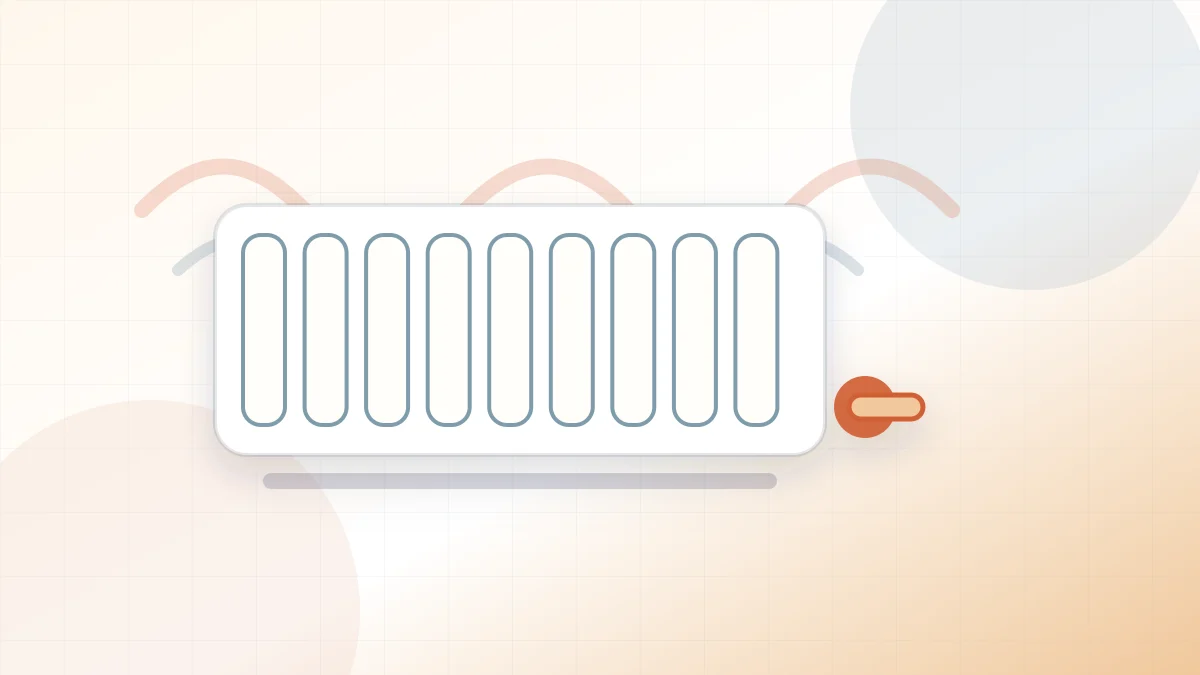
Panel radiators are flat, rectangular heat emitters that hang on a wall and warm a room by circulating hot water through internal channels. They are the most widely used radiator type in homes and small commercial buildings with hydronic (wet) heating systems, and they tend to be quieter, slimmer, and more responsive than older cast-iron designs.
If you have ever stood next to a thin white radiator under a window, you have almost certainly stood next to a panel radiator. This guide explains how they work, the main variations you will encounter, and what matters when one is being chosen, installed, or replaced.
What a panel radiator is
A panel radiator is a sealed steel emitter built from one or more flat metal panels welded together with internal waterways. Hot water from a boiler or heat pump flows in through a valve at one end, releases heat into the metal surface, and exits cooler at the other end. The metal then transfers warmth into the room mostly through convection (rising warm air) and to a smaller degree through radiation.
Most panel radiators also include vertical fins, called convector fins, welded to the back of each panel. These dramatically increase the surface area in contact with air, which is why a modern panel radiator can put out significantly more heat than its slim profile would suggest.
How panel radiators work
In a typical hydronic system, a boiler or heat pump heats water and a circulation pump moves it through a loop of pipes. Each radiator sits on that loop with two valves: an inlet valve that controls how much water enters, and a lockshield valve at the other end that is set during system balancing.
As water passes through the radiator, the steel panels heat up. Air near the radiator warms, becomes less dense, and rises. Cooler air is pulled in along the floor to replace it, setting up a gentle convection loop that gradually warms the whole room. This is why placement under a cold window often works well: the rising warm air offsets the cold downdraft from the glass.
Single panel vs double panel radiators
Panel radiators are usually described with two numbers, such as Type 11, Type 21, or Type 22. The first digit is the number of water panels and the second is the number of convector fin sets.
- Type 11 — one panel, one set of fins. Slim and lower output.
- Type 21 — two panels, one set of fins between them. Moderate output.
- Type 22 — two panels, two sets of fins. Common workhorse for living spaces.
- Type 33 — three panels, three fin sets. Higher output for large or poorly insulated rooms.
More panels means more heat output but also more depth on the wall. A double panel radiator might be 100 mm thick, while a single panel can be closer to 60 mm. The right choice depends on how much heat the room actually needs.
Where panel radiators are commonly used
Panel radiators are typical in apartments, single-family homes, small offices, schools, and care facilities anywhere a boiler or heat pump supplies hot water to a closed loop. They are less common in regions that rely on forced air heating, where ductwork delivers heat instead of pipes.
In retrofit projects, panel radiators are often chosen because they are relatively inexpensive, easy to source in many sizes, and compatible with both traditional gas boilers and lower-temperature heat pump systems when sized correctly.
Benefits of panel radiators
- Compact, wall-mounted design that frees up floor space.
- Fast warm-up time compared to cast iron.
- Wide range of widths and heights to fit awkward spaces.
- Compatible with thermostatic radiator valves for room-by-room control.
- Generally lower cost per kilowatt of output than designer or column radiators.
Limitations to understand
Panel radiators are not perfect. The painted steel surface can be damaged if scratched or knocked, and internal corrosion is possible over the years if system water chemistry is neglected. They also need a reasonable flow temperature to perform at the rated output, which is something to consider when pairing them with a low-temperature heat pump.
Basic sizing considerations
Radiator sizing starts with the heat loss of the room — how many watts are needed to keep it at a comfortable temperature on a cold day. That depends on room volume, insulation level, window quality, ceiling height, and how exposed the walls are. For a detailed walkthrough, see our radiator sizing guide.
Maintenance tips
- Bleed radiators when cold spots appear at the top — this releases trapped air.
- Check that thermostatic valves move freely at the start of each heating season.
- Watch for damp patches around valves and joints; small leaks can rust quickly.
- Have the system water treated with an appropriate inhibitor by a qualified heating engineer.
Frequently asked questions
Q.How long do panel radiators usually last?
With clean system water and proper inhibitor, modern steel panel radiators commonly last 15 to 25 years. Premature failure is almost always linked to corrosion from untreated water or repeated draining of the system.
Q.Can I paint a panel radiator?
Yes, with proper radiator-rated paint and full surface preparation. Painting reduces heat output very slightly. Avoid blocking convector fins with thick coats.
Q.Are panel radiators noisy?
When working correctly they are nearly silent. Gurgling usually indicates trapped air, while ticking sounds are normal as metal expands and contracts during heat-up.
Related articles

Panel Radiator vs. Towel Radiator
Both heat a room, but they are designed for very different jobs. Here is how to choose between a panel and a towel radiator.

How to Choose the Right Radiator Size
Radiator sizing is not guesswork. Here is what actually affects how much heat a room needs.

Radiator Valves Explained
Manual, thermostatic, and lockshield valves each do a different job. Understanding them is the key to a balanced heating system.