Heating System Replacement Waste Removal Planning
Replacing boilers, radiators, pipework, or plant-room equipment creates more logistics than most owners expect. Here is how to plan waste removal before work starts.
By Pansa Editorial Team · Published Jun 14, 2026
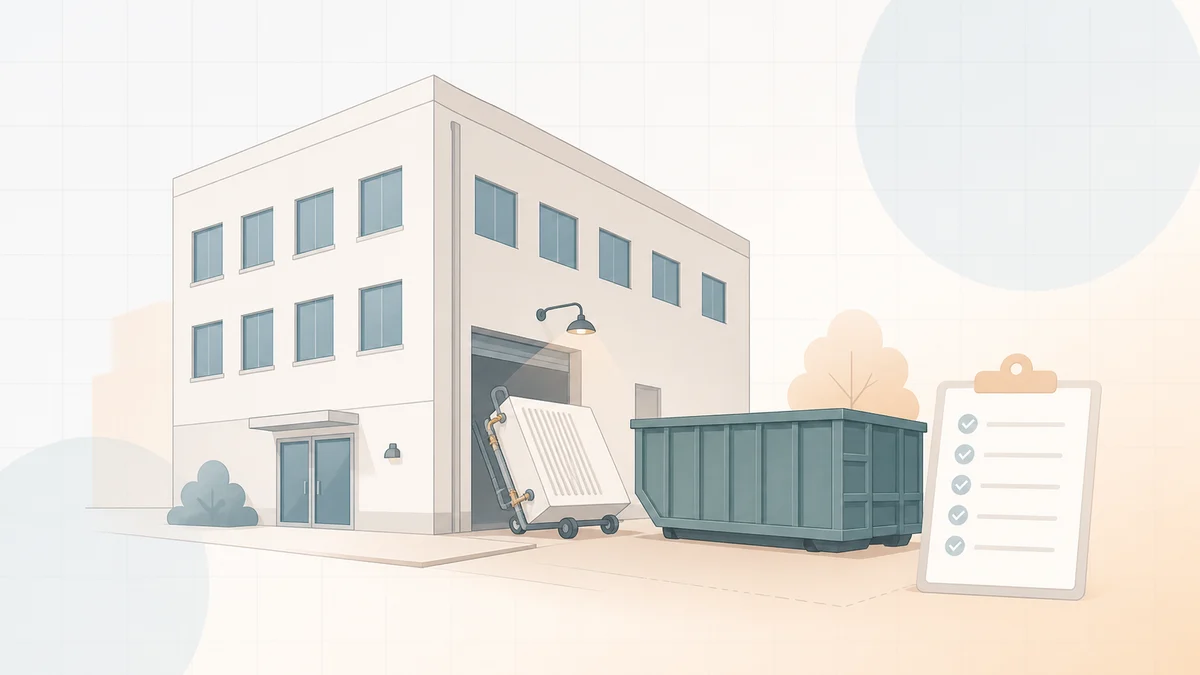
Heating system replacement waste removal is easy to overlook until old radiators, pipe sections, packaging, pallets, and plant-room debris start blocking the work area. For property managers and building owners, cleanup planning should sit beside the heating scope, access plan, tenant notices, and safety arrangements from the start.
This guide explains how to plan waste removal during a boiler replacement, radiator upgrade, mechanical room renovation, or larger commercial heating project. It is not a substitute for local disposal rules or contractor advice, but it will help you ask better questions before crews arrive.
Why waste planning belongs in the heating scope
A heating contractor may remove some materials as part of the job, but that does not always cover every waste stream. Old panel radiators, corroded pipework, insulation offcuts, timber boxing, drywall patches, boiler crates, and general renovation debris can each follow a different route. If no one owns that plan, the project slows down.
A written cleanup plan reduces blocked corridors, missed collections, tenant complaints, and extra callout charges. It also helps the contractor keep plant rooms and access paths clear enough for safe work.
List the materials before choosing a container
Start with the expected debris, not the dumpster size. A small radiator replacement in occupied apartments may produce mostly scrap metal and packaging. A commercial boiler room upgrade may include pipe insulation, old pumps, valves, concrete pads, sheet metal, timber, and general construction waste.
| Material | Planning note |
|---|---|
| Old radiators and metal pipework | Often recyclable as scrap metal; confirm whether the contractor separates it. |
| Boiler or plant-room equipment | May need specialist handling, lifting equipment, or manufacturer disposal guidance. |
| Packaging and pallets | Bulky but light; plan space so it does not fill the work area. |
| Drywall, timber, and boxing | Common when pipes or emitters are hidden behind finishes. |
| Insulation or suspect materials | Stop and verify rules before disturbing anything that could require special handling. |
Match container size to the job sequence
Roll-off dumpster planning for property maintenance should account for timing, not just volume. A container that is large enough on paper may still be wrong if it arrives too late, blocks a delivery route, or fills before the heaviest demolition day.
- For a single radiator or small pipework project, ask whether contractor haul-away is simpler than a container.
- For a multi-room radiator replacement, plan for packaging and removed emitters to leave the building daily.
- For a boiler replacement or mechanical room renovation, coordinate container delivery before demolition begins.
- For phased occupied-property work, consider smaller swaps instead of one oversized container that sits for weeks.
Plan access, placement, and tenant disruption
The best dumpster location is usually the one that keeps waste movement short without blocking fire routes, tenant parking, loading docks, utility covers, or delivery access for new equipment. Walk the route from the plant room or apartment stack to the container and note every tight turn, stair, lift, and door threshold.
For occupied buildings, schedule noisy or disruptive waste moves during agreed working hours. If a container will remove parking spaces or alter a loading area, include that in tenant communication before the heating work starts.
Coordinate the contractor, hauler, and site manager
A useful heating replacement cleanup checklist names who is responsible for each waste decision: separating scrap metal, protecting floors, moving materials through common areas, calling for swaps, sweeping work zones, and documenting disposal where required.
If your hauler or service partner manages multiple containers, swaps, and delivery windows, dispatch platforms such as Rolloff Ops can help keep roll-off dumpster operations organized on their side of the job. For the property manager, the practical takeaway is simpler: confirm one contact, one schedule, and one process for change requests before demolition begins.
Keep safety and compliance separate from convenience
Not every heating project waste item belongs in a general container. Fuel-burning equipment, refrigerant-adjacent components, pressurized vessels, electrical controls, contaminated water, and suspect insulation should be handled only under the right local rules and by qualified people.
Document the cleanup plan
Documentation is especially useful for commercial buildings, rentals, and insurance-sensitive projects. Keep the waste removal plan with the heating scope so future owners or facility teams can see what was removed, when it left site, and who handled it.
Heating replacement waste removal checklist
- Identify expected waste streams before work starts.
- Confirm what the heating contractor will remove and what remains your responsibility.
- Choose container size and swap timing around the work sequence.
- Mark the container location and protect nearby paving, doors, and floors.
- Keep exits, fire lanes, utility access, and tenant routes clear.
- Separate recyclable metal where practical and allowed.
- Verify local rules for appliances, controls, insulation, and suspect materials.
- Record hauler contact details, pickup dates, and any disposal paperwork.
Common mistakes to avoid
- Assuming the heating contractor includes all cleanup without checking the proposal.
- Ordering a container based only on volume, without considering access and swap timing.
- Letting scrap metal, pallets, and packaging share a tight plant room during active work.
- Blocking tenant parking or loading areas without advance communication.
- Treating old insulation or unknown materials as ordinary debris.
Good waste planning will not make a heating replacement invisible, but it can make it orderly. When debris routes, container timing, and responsibilities are settled early, the heating team can focus on the system itself: safe removal, correct installation, testing, balancing, and handover.
Frequently asked questions
Q.Do I need a dumpster for a radiator replacement project?
Not always. A small residential job may be handled by contractor haul-away or scrap metal recycling. Multi-room, commercial, or plant-room projects usually need a clearer waste removal plan.
Q.Who is responsible for heating replacement debris?
It depends on the contract. Confirm in writing whether the heating contractor, general contractor, property owner, or hauler is responsible for each waste stream.
Q.Can old radiators go in a general construction dumpster?
Rules vary by location and hauler. Many old radiators and metal pipes are better separated for scrap recycling, while regulated or suspect materials need special handling.
Related articles

Commercial Heating Maintenance Checklist
A structured maintenance checklist for commercial heating systems, organised by season and frequency.

Winter Property Maintenance Checklist for Building Owners
A printable-style winter checklist for landlords and building owners — covering heating, plumbing, roofs, and tenant comfort.

Common Plumbing Issues Around Heating Systems
Plumbing and heating systems overlap more than people realise. These are the issues that show up most often.